Category Archives: #AlwaysBelieve

Misplaced Priorities

image001 (1)

One of my great fortunes in growing up in South Florida has been reading the Miami Herald from an early age and, thus, being exposed to the brilliant American commentator and novelist Leonard Pitts Jr.  Calling Mr. Pitts a Columnist or Opinion Writer somehow seems too shallow for someone so gifted, someone who so frequently makes me think, wonder, and, yes, worry. Each time I think I’ve read his most profound piece he proves me wrong with yet another thought-provoking commentary. Candidly, I think of him more as a poet, someone whose thoughts and words deeply touch my soul while he also serves as a consciousness of our culture.

As ever, Mr. Pitts’ column this weekend proves why I so love and appreciate his Pulitzer Prize winning work. The potable water crisis in Jackson, Mississippi is a tragedy beyond comprehension but was avoidable had the real needs of its residents been a priority for local, state, and our national government. Unfortunately, as happens in places like Jackson (and Miami) all over the planet, impoverished people are too often overlooked, and their needs marginalized, as so-called leaders prioritize politics and profits over public service. Like the water in Jackson, it makes me sick.

In such a wonderful country filled with good people, we should each ask ourselves daily how we could possibly allow our political discourse to go so far astray of what’s important to our lives and what we owe to future generations that follow. By spending so much time on imagined, fictitious threats by pandering to a minority of ill-informed people, we are missing important opportunities to address the real issues of our lifetimes, including a failing American infrastructure and only the most significant threat our planet has ever faced: the man-made climate crisis that’s causing the “freakish weather” Mr. Pitts writes about this weekend.

Can you imagine the problems we collectively could solve if some would stop wasting time propagating fictitious fears about election lies, as just one for example, and went about solving real issues related to our roads, water, sewer systems, and, yes, our warming climate? Think about it. Telling a minority of Americans what they want to hear rather than the truth fills our minds and media with mind numbing trash and that is shameful. Far too many elected leaders or candidates for office this year are still propagating a lie that the 2020 election was stolen when something like 60 or so courts, many of them with judges seated by our former President himself, have ruled that our current President was legally and democratically elected. The suggestion otherwise is a colossal waste of time, but it is also a tactic that many increasingly believe threatens our very democracy, much less something so seemingly simple as ensuring that our citizens have water.

If you have not read Mr. Pitts regularly in the past, I can’t think of a better place to start than with his thoughts on “misplaced priorities” this weekend. It’s a bit about water in Jackson but more so about much deeper things that each of us must consider as we decide what our legacy will be during our lifetimes here on earth.

Good luck getting a glass of water in Jackson

When it came to making sure 150,000 people had water to drink, Mississippi had more important things to do. But then, poor and/or dark-skinned people are often taken for granted.

There is no water in Jackson, Mississippi.

Not at this writing, at least. At this writing, the nearly 150,000 residents of the state capital have been advised that even if they are able to coax some of the precious liquid from their taps — water pressure is feeble — it is unsafe for drinking, bathing, or washing dishes.

Note, please, that they were already under a boil-water order — the latest in a series. Then heavy rains and flooding overwhelmed the primary water treatment plant in a city where some of the pipes date to the days Model Ts still trundled dirt roads and biplanes carved the skies. Gov. Tate Reeves was unable to say in a Monday night briefing when the situation might be rectified.

So there is no water in Jackson.

And Mississippi should be embarrassed. But Mississippi should not be surprised. To the contrary, it has known for many years that the city’s water infrastructure was too old and brittle to serve its needs. They saw the crisis coming, but they did not avert it.

Mind you, because he was concerned about education that “aims to only humiliate and indoctrinate,” the governor did sign a bill making it impossible to teach “critical race theory” in schools.

And because he wanted to “protect young girls,” he did sign a bill barring transgender student athletes from participating in sports that correspond with their gender identity.

And because he grieved “63 million babies” aborted since 1973, he did sign a bill banning almost all abortions.

He acted to avert those “threats.” But good luck getting a glass of water in Jackson.

All that said, this is not really a column about Jackson. Or, for that matter, water. It is, rather, a column about misplaced priorities. That seems a constant theme where people of color and poor people are concerned, so no one will be surprised to hear that eight in 10 Jacksonians are African American, while one in four is poor. Nor should it stun anyone to hear that experts say Jackson’s woes grow from a sediment of white flight and malign neglect. When it came to making sure 150,000 people had water to drink, Mississippi had more important things to do. But then, poor and/or dark-skinned people are often taken for granted.

Poor and/or dark-skinned people are also the ones who often function as the proverbial canary in the coal mine.

Thus, it is worth noting that while white flight and malign neglect are the foundation of this disaster, its proximate cause is simpler: freakish weather broke a decrepit system. And freakish weather, not to put too fine a point on it, is not limited to poor people, Black people, or Jackson. Indeed, climate change having been allowed to reach a state of daily crisis, freakish weather is rapidly becoming normal weather for us all.

One wonders, then, how much longer we can continue misplacing priorities, embracing would-be “leaders” who focus on fighting culture wars, on offering the addictive sugar high of performative thrusts against despised Others — “Take that, critical race theory!” — even as pipes corrode, bridges age, the electrical grid fizzles, sewers clog, roads buckle and weather grows more freakish.

Here’s an idea. How about if we required those who govern to actually govern, i.e., to protect and maintain basic services and quality of life? How about if we valued simple competence over sugar highs? How might that be?

See, there is no water in Jackson. And yes, that’s an embarrassment for Mississippi.

But it’s a warning for us all.
Why A San Francisco Six Grader Should Give Us All Hope

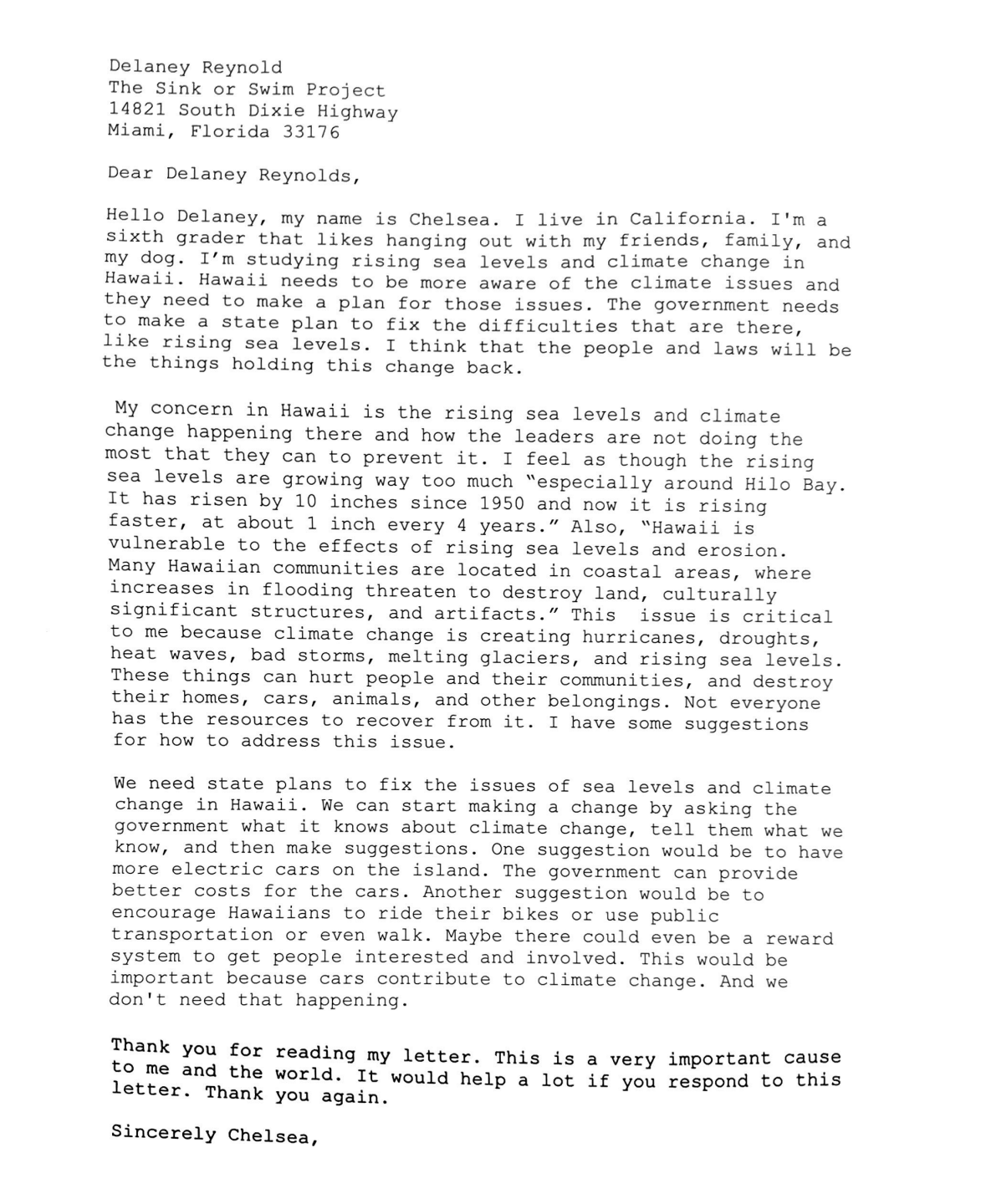
My new pen pal friend, Chelsea Mickels, is simply amazing and like so many of the young people I hear from, she is an inspiration. After you read a bit more about her and her concerns, I am pretty sure that you will surely agree with me that Chelsea and young people like her all over our planet will solve our climate crisis. She simply won’t stand for any of the delays that the adults in charge today and their antiquated policies subject her future too.

Chelsea is a sixth grader from northern California that wrote me recently about her concerns over our climate crisis, including sea level rise. She’s particularly concerned about a place I know well and visited a few years ago, Hilo Bay on the Big Island in Hawaii. Hilo Bay is near Hawaii Volcanoes National Park and is well known for its Rainbow Falls, as well as its incredible fields of lava that have cooled to form basalt. It is breathtaking.

Unfortunately, like so much of our planet and so many amazingly unique habitats, its very future is at dire risk of extinction because of sea level rise. If you don’t mind, I will let Chelsea tell you what’s happening, what the science tells us, and, of course, about her concerns. Chelsea’s letter to me is below:
Chelsea Letter

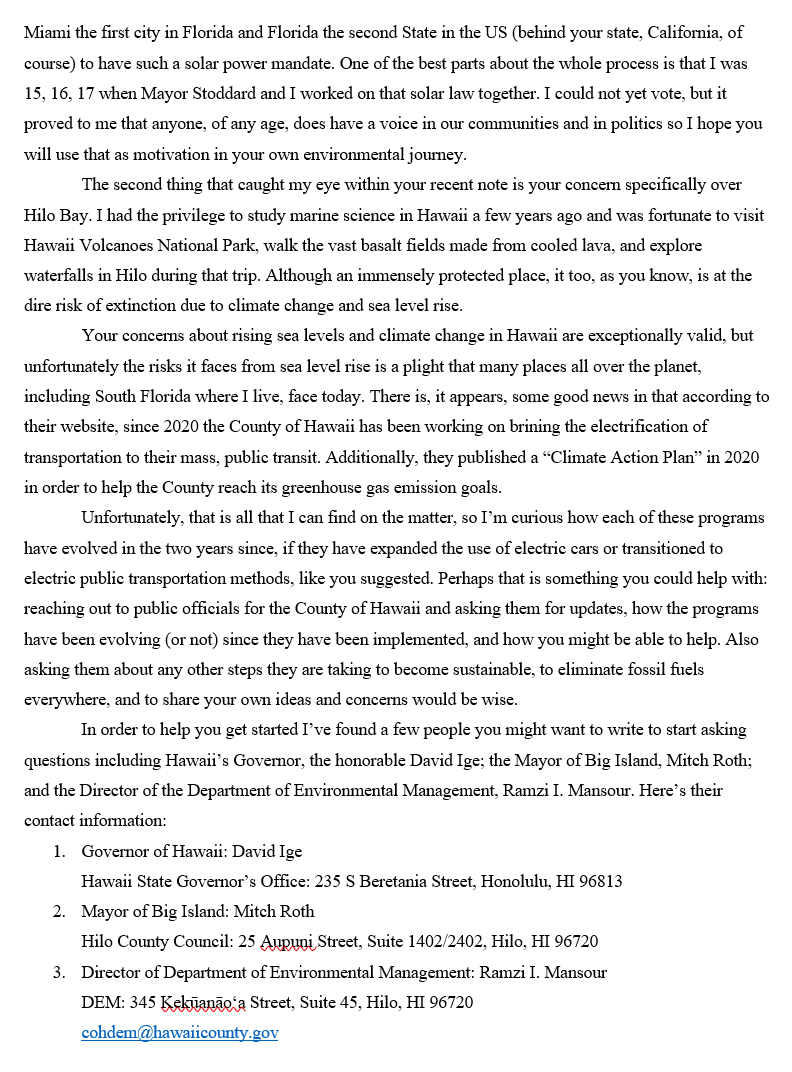
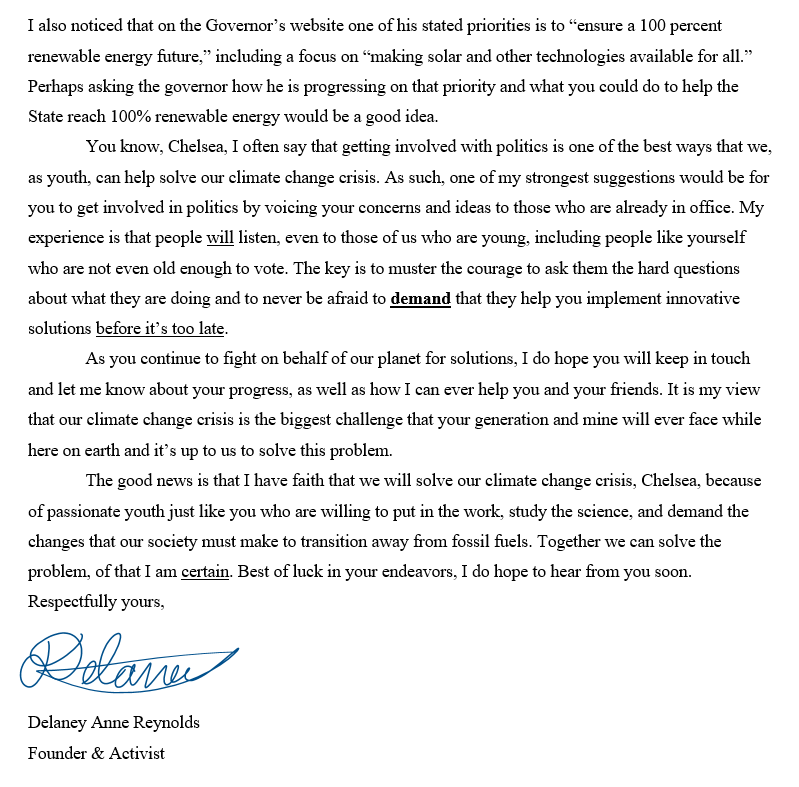
And, my letter in response to Chelsea is below:

Delaney Letter 1

Delaney Letter 2

Delaney Letter 3

Like I said, Chelsea is amazing and I hope that her articulate, passionate comments inspire everyone who reads this post. It’s up to all of us to show her and the world’s youth that her concerns are important to each of us too. She and every generation that follows deserves nothing less than our very best effort while we are here on earth to make things better, to protect our environment, and that most certainly starts with solving our climate crisis in places like Hilo Bay and everywhere else around the world.

I do hope that you will join Chelsea and me today by demanding action and improvement in your community before it’s too late because only together can we solve our climate crisis.

Summer Time 2022

I’ve just finished my first year of graduate school, in this case my first year of law school in a dual degree program at the Abess Center for Ecosystem Science and Policy here at the University of Miami where, in the years to come, I hope to earn both my law degree as well as a Ph.D. The last year has been incredibly interesting, fascinating really, but everything you’ve heard about the first year of law school being rigorous is, well, true. Reading hundreds and hundreds of pages of cases and related work every day has led to countless late nights and more than a few occasions where I found myself having fallen asleep on my books, but I’d not trade it for anything in the world. I’ve learned a great deal, made some incredible new friends, and been inspired by my professors.

I’ve also been honored to be selected to join the Law School’s Environmental Law Clinic; organized a wonderfully received symposium on campus related to the Juliana v. United States climate lawsuit and Florida Rule setting goals for 100% renewable energy by 2050 that was led by my friend and Senior Litigation Attorney Andrea Rogers from Our Children’s Trust, who visited from Eugene Oregon; and to top things off no sooner than the school year ended, I learned that I’ve been chosen to attend the Conference of the Parties (COP) 27 in Sharm El-Sheikh, Egypt this coming November. Thanks so very much to Dr. Jessica Owley and Professor Abigail Fleming for your friendship, inspiration, and dedication to the law, our environment, and, well, me. I am grateful.

IMG_4563 7DFA0840-C5D3-440A-A73C-54CD5429B292 IMG_5734

With the arrival of a much needed summer break I have spent the last month away from the law library, books, and computer as much as possible while traveling to some of North America’s truly beautiful places. The start of the summer saw me travel to upstate New York to visit my brother at Cornell University and while there check out the gorgeous nature that surrounds Ithaca, including some of the tallest waterfalls I’ve ever seen. When I typically think of New York I think of New York City, a place where I’ve met some incredible people and done important work over the years, but I am here to say that upstate New York is stunningly beautiful.

IMG_5263 IMG_5236 C18D58B7-0529-4DB0-9282-DB0934A4AB48
8CF23819-A397-4894-8E67-4F5EDB83B1AF IMG_5353 IMG_5298

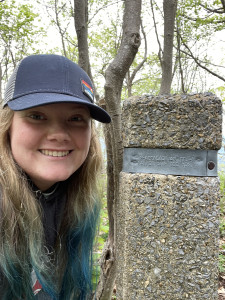
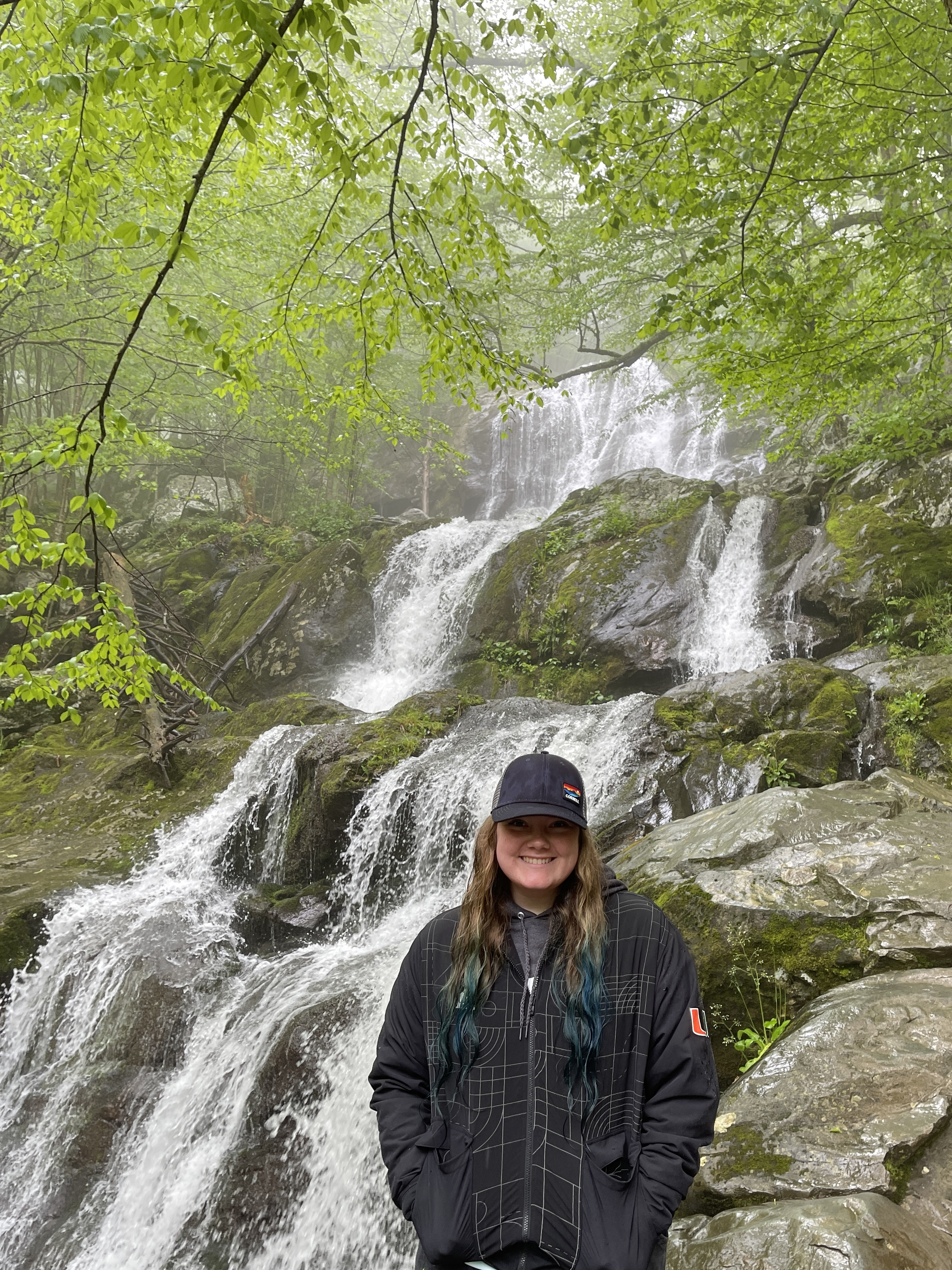
After a quick stop in NYC my next stop was a visit to Shenandoah National Park in Virginia where I drove the 105-mile-long Skyline Drive, hiked on the Appalachian Trail, stayed at the nearly 100-year-old Skyland Lodge, and explored the mysterious Stony Man trail amidst some of the most fabulous rock formations, while being followed for several minutes by the largest deer I’ve ever met. Shenandoah is simply breathtaking, a treasure for sure and my visit there allowed me to check off having visited my 11th of America’s 63 National Parks (one of my life goals is to visit all 63).

FC9800C3-D495-4158-A32D-576EEACCEC96 IMG_5253 IMG_5487

And speaking of National Parks, my next trip was to Congaree National Park in South Carolina, a stop that allowed me to check off number 12 on that loft list of 63 National Parks. Talk about a great way to start my summer! Congaree was once owned by a Chicago logging company and as you kayak through the park’s South Cedar Creek River, as I did early one morning, or hike the Boardwalk trail, as I did one afternoon, you can understand why that would have been the case. The Cyprus, Tupelo, and Loblolly Pine Trees that the park is well known for tower one to nearly two hundred of feet above the forest floor.

The park is a fascinating place for many reasons including the fact that it floods by as much as 12 feet several times during the year and thus much of the habitat is a dense, near swamp like, environment filled with mystery. 1989’s Hurricane Hugo, then the largest natural disaster to hit North America, did an estimated $4 billion in damage in the region and while it thankfully missed most of Charleston to the South, much of the dead remains of its damage can be found in Congaree as once majestic gigantic trees killed by that storm lay decaying amongst their cemetery of the forest floor. Seeing those trees ominously silent in their final resting place three decades after that storm led me to think about the increasing number of devastating hurricanes you and I will face from our global climate change crisis that is warming earth and makes me wonder what special place will next suffer the fate so many in Congaree did in 1989.​

IMG_5544

IMG_6267 IMG_5521 IMG_4751

A few days after my time in South Carolina I enjoyed my first visit to the Pisgah National Forest in North Carolina. Pisgah is comprised of over 500,000 acres and is the home to America’s first School of Forestry, a site I visited while there that includes a wonderful exhibit hall with a large section related to our climate crisis. While there I also enjoyed hiking on a part of the Appalachian Trail, a horseback ride through the mountains, a picnic along the South Mills River next to a rushing waterfall, and exploring the highest elevations of the Blue Ridge Parkway where the views of the surrounding mountains were nothing less than stunning. If you love the pink blooms of wild mountain laurel and endless mountain views in every direction, then the ridges along the top of the Pisgah are for you.

E3BDA45C-E352-4267-81F4-7936329462D4

As I write this I am back home on my beloved No Name Key here in the Florida Keys. Like much of North America, the summer temperatures here are high (as are the high tides) but the water over the past week has been glass calm while the Royal Poinciana trees in our yard are in full bloom in a blaze of orange that fills their canopies. Now that I have returned to South Florida I am back to work on a range of important topics including research with my friends at Field School (www.getintothefield.com), progressing my research for my Ph.D., working on the implementation of the energy rules that will allow Florida’s power system to transition to sustainable energy by 2050 and, of course, The Sink or Swim Project’s many initiatives. My studies in recent months, along with the Florida Petition of Rulemaking, kept my schedule full but with the school year behind me I am excited about a summer of work that’s filled with promise and progress including my hope to be able to post more often than was possible during the school year.

I’ve shared some of my early summer adventures with you in hopes that you, too, will get out and enjoy our incredible natural environment. Here’s to hoping you can spend a lazy day floating down a cool river, take a hike off into the woods on an adventurous trail, snorkel amongst a sea of fish friends, enjoy an evening filled with the “fireworks” that only fireflies can provide, or something equally amazing. Our natural environment is endlessly filled with wonder that soothes the soul and is most certainly worth enjoying and protecting forever more, so here’s to you having a fantastic summer and getting outdoors.

1 … 17 18 19 20 21 … 34