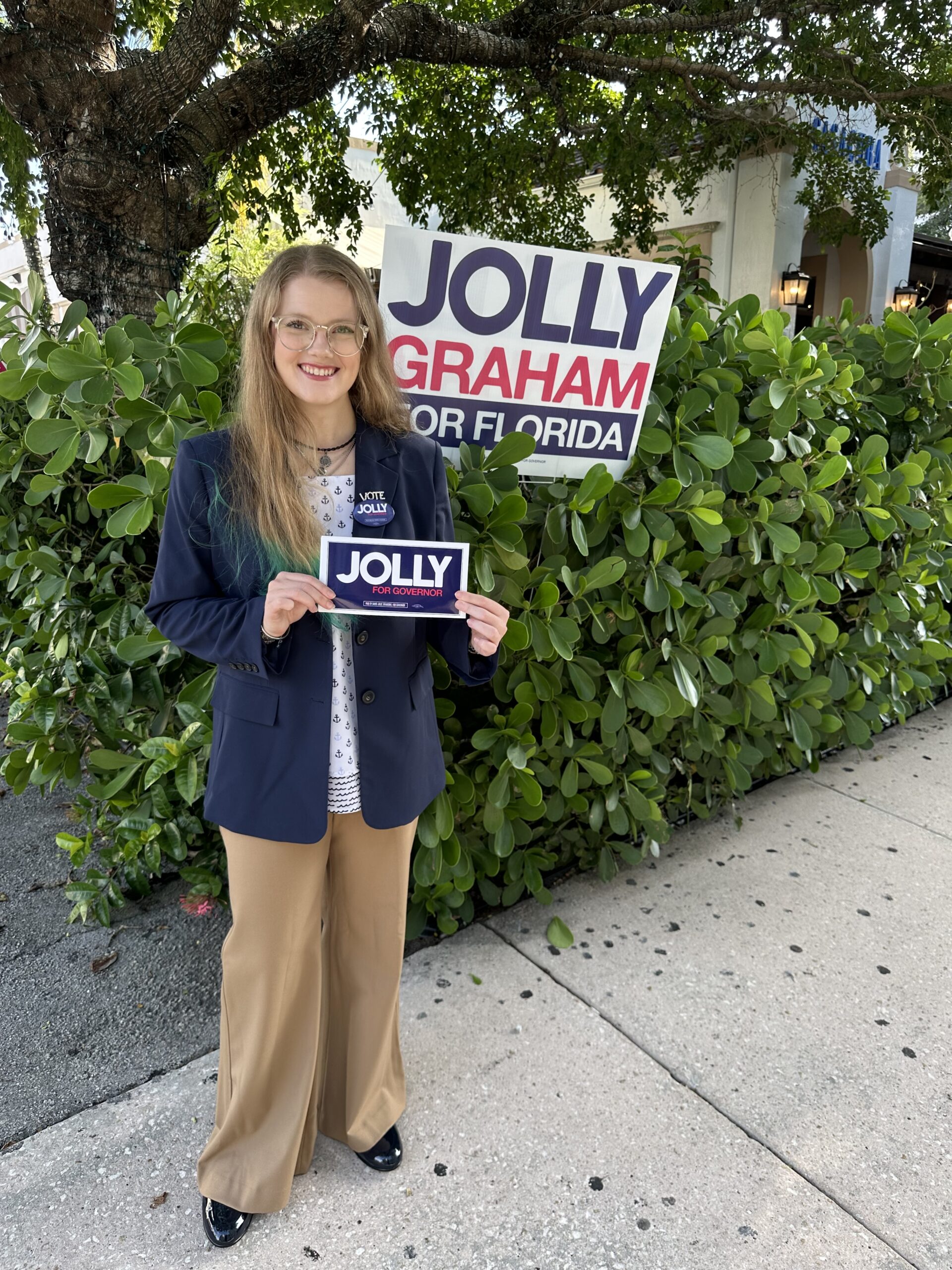
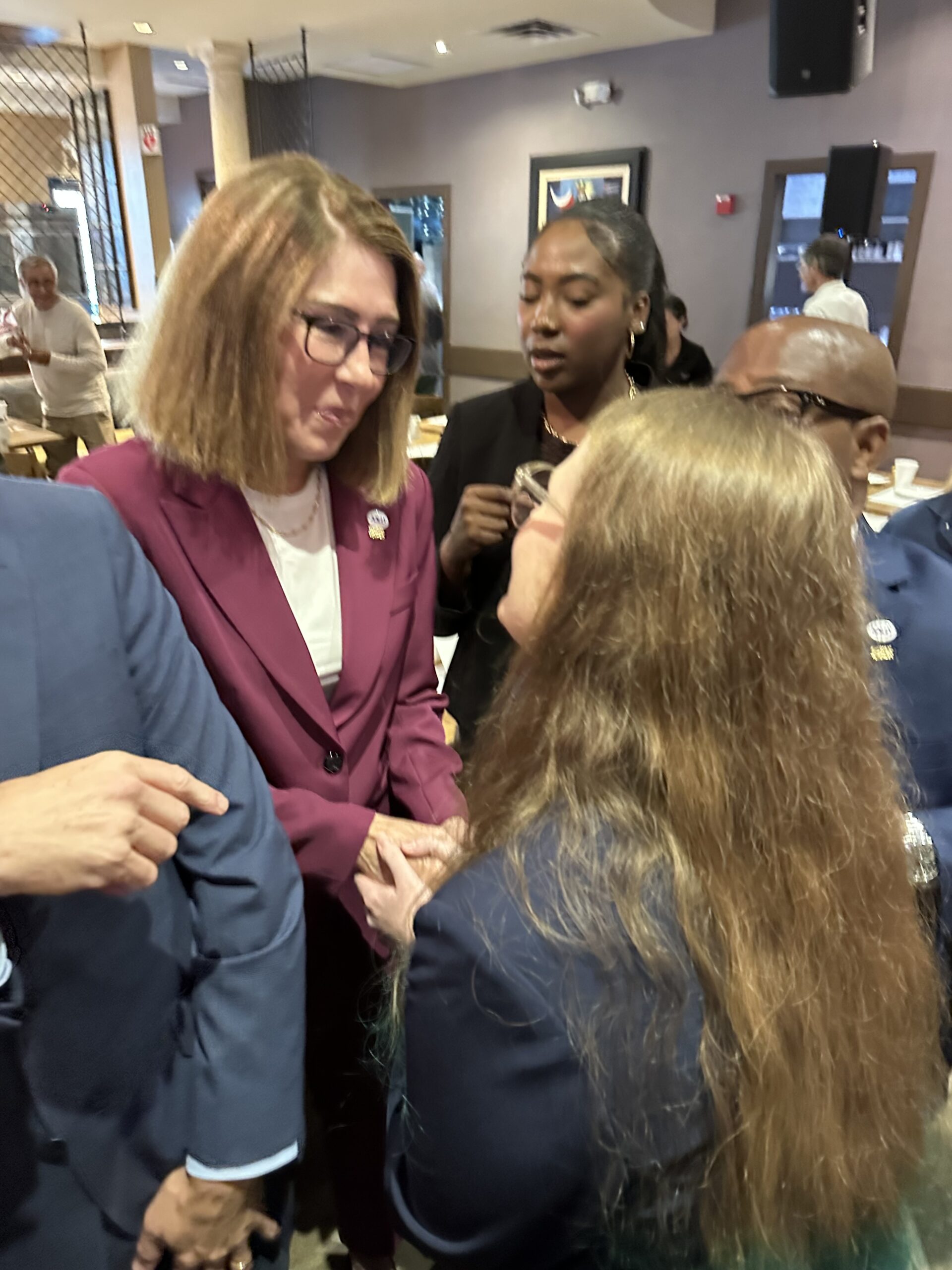
Author Archives: DReynolds

I’m Off to Belém, Brazil for COP30

I am off to the Amazon Delta — the gateway to the Amazon rainforest — to visit Belém, Brazil, for the United Nations’ Conference of the Parties (COP30) meetings today. I can already feel the humid air of the rainforest, hear its deep green pulse, envision the river’s sinew winding through the Amazon, hear the song of frogs, and see the hush of timber-giants overhead. This will be my first time in Brazil, but more than that, my first time in the Amazon region itself: a place of both immense life and immense risk. Unlike previous UN COP events I’ve attended, I step into Belém not just as a delegate but as a witness, to the Amazon forest, yes, but also to the immense potential that forests, wetlands, oceans, and coastal communities around the world hold in this fight to fix our climate.

My time in Belem will be working as a lawyer and designated delegate for the Republic of Palau, a small island nation standing at the front lines of the climate crisis. For Palau, as is the reality here in South Florida, rising seas are not a future projection; they are already reshaping lives. As I work to help them in Belém, I plan to carry with me the voices of communities whose reefs are salt-etched, whose coastline is eaten by tides, and whose children rightfully ask what their future holds. When we talk about climate change, the headlines often center on vast continents or major pollution emitters like America’s oil companies, but for Palau and other small island states, the story is one of urgency, justice, and survival.

Palau, a pristine archipelago of approximately 340 islands scattered across the western Pacific Ocean, is a nation of breathtaking beauty known for its vibrant coral reefs, turquoise lagoons, and deep cultural ties to the ocean, but also of extraordinary vulnerability. Science tells us that sea levels around Palau are rising at nearly twice the global average, threatening low-lying coastal villages and vital infrastructure.

Ocean warming has already disrupted the island’s delicate balance of marine biodiversity, home to more than 1,300 species of fish and 700 species of coral, while intensifying storms and shifting rainfall patterns place further strain on freshwater supplies and agriculture. For Palau, climate change is not abstract science; it is a lived reality, measured in saltwater intrusion, eroding shorelines, and the fading colors of once-flourishing coral gardens.

“The failure to limit global heating to 1.5 °C is a moral failure and deadly negligence. Every fraction of a degree means more hunger, displacement, and loss – especially for those least responsible.”
Antonia Guterres, UN Secretary General

COP30 Goals & Opportunities

Dedicated readers might recall my post over this past summer, Delay, Denial & Disturbing Developments in Bonn, following the three weeks I spent in Germany as a delegate for another Small Island Developing State, in that case, the Federated States of Micronesia (FSM). That annual meeting of the Subsidiary Bodies of the United Nations Framework Convention on Climate Change serves to advance the nuts-and-bolts details of the issues that the UN and the world’s nations are trying to address during the COP events, such as those happening this week in Brazil.

In that post, I outlined a variety of concerns that I witnessed in Bonn to the world making substantive progress on addressing our climate crisis, including:

1) The United States was NOWHERE to be found,

2) Wealthy, oil-rich nations repeatedly blocked progress,

3) There was little consensus on an agenda with over 50 topics and, perhaps most disturbing to me,

4) There were obvious attempts by the world’s oil- and gas-producing nations to sideline scientific facts and findings about the damage fossil fuels are having on our planet.

Will these same impediments to progress still be present in Brazil? Brazil’s President, Luiz Inacio Lula da Silva, has said COP30 should be the “COP of Truth” and that “now is the time to take seriously the warnings of science.” I could not agree more, and will be fascinated to witness whether the world decides to take a step towards solutions or allows wealthy oil-rich nations and the fossil fuel-producing polluters to limit our progress in the Amazon.

As we begin our work this week, I am going to hope that progress is made and, with this in mind, offer a few key issues that I believe will dominate COP30:

1. Emissions & Mitigation

Over the summer, I also authored a post about why keeping temperatures within 1.5 degrees above pre-industrial levels is critical to our planet and each other. The target of limiting warming to 1.5°C remains central to any progress in fixing our climate, so reducing fossil fuel dependence, accelerating renewable energy deployment, and closing the gap between what the nations of the world pledge and the actual progress they are making are critical to our success in Belém.

2. Adaptation & Resilience

For Palau and many others, the question is: how do we adapt to the damage fossil fuel use over the last 100 or so years has caused? That means resilient infrastructure, coastal protection, mangrove restoration, and improved early warning systems. Adaptation cannot be an afterthought.

3. Nature-based Solutions & The Amazon

Having this conference in Belém, on the edge of the Amazon, is symbolic and vital. The Amazon is one of the planet’s lungs, a biodiversity powerhouse, a carbon sink. Protecting it, funding that protection, and guarding against tipping points are each crucial. The question is, will being in one of the world’s most important environmental regions be “motivational” to everyone in attendance?

4. Climate Finance, Transparency, & Implementation

It’s one thing to make big statements in a press conference, but another to deliver real results. Past COPs have set ambitious goals, but follow-through often lags. At COP30, there’s pressure to close the ambition–delivery gap. Ensuring that money flows to where it is most needed (especially to vulnerable states), that commitments are truly transparent, and that mechanisms exist for monitoring and accountability are vital to solving what’s truly a worldwide problem.

5. Equity, Inclusion, & Climate Justice

Climate change is not just a scientific or economic challenge; it’s a justice issue. Ensuring that small island states like Palau, frontline communities (including South Florida), and Indigenous peoples (including those in the Amazon region) have a seat and equal voice at the negotiation table and real influence is critical to success. Vulnerable nations need not only promises but predictable, reliable finance and mechanisms for the loss and damage they are suffering.

6. China “Versus” the United States

Another critical component of COP30, in my view, is that the United States, the world’s largest producer of crude oil and the second-largest emitter of carbon, has announced it will not send a delegation to Brazil. China, the world’s largest producer of coal and number one emitter of fossil fuel pollution will, however, be here and engaged.

I am increasingly concerned that America’s politicalization of our climate crisis has created staggering economic opportunities for other nations in important (and lucrative) fast-growing markets such as sustainable energy and electric vehicle manufacturing. For countless business and environmental reasons, it’s important that the U.S. finds a way to set politics and pandering to fossil fuel interests aside before other nations create dominant market positions and reap the riches of the global transition to a sustainable energy-oriented economy that is already underway.

Looking Ahead

As I leave for Brazil, my heart is full of hope while my mind is focused on reality. For the Amazon and world beyond, this conference is more than a story about forestry; it’s about planetary health. For Palau, my work is more than diplomacy; it’s about survival. In Belém, I hope to walk among trees that have stood for centuries, reflect on the voices of islanders who may stand for only decades more if we fail, and witness a conference that bridges hope with action. As always, I will do my best to provide you with an honest account of what was achieved, what fell short, and what comes next.

Allow me to end this post by extending my heartfelt thanks to those folks who have made this possible. Thank you to Dr. Jessica Owley and Val Fajardo (Environmental Law Fellow) at the University of Miami School of Law, whose mentorship and guidance have long supported my path in climate law and international environmental governance. And, thank you to the incredible team representing the Republic of Palau, including Joe Aitaro and Palau’s President Surangel Whipps Jr., for allowing me the honor of representing you and the people of Palau in Belém.

Youth vs. Trump: Our Day in Court for the Climate

Today is a day I will never forget. Alongside 21 of my friends and fellow plaintiffs from all across these United States of America, I will walk into a federal courtroom in Missoula, Montana, to participate in a historic hearing in our case, Lighthiser v. Trump. You see, this will be the very first time in the history of our country that a federal court and judge will hear live testimony in a youth-led constitutional climate lawsuit. 

For many years, young Americans like me have spoken out about the climate crisis in classrooms, at rallies small and large, in city halls, and even on the global stage about our concerns related to our warming world.

But today, September 16th, 2025, is dramatically different.

Today, we are standing in court to demand that the U.S. Constitution protect our most basic rights to life, liberty, and security.

On his first day back in office, President Trump signed a series of Executive Orders that declared a fabricated, fake “National Energy Emergency” and directed the federal government to: 

• Unleash more oil, gas, and coal on public lands;

• Block clean energy programs and infrastructure; and 

• Suppress climate science and the public’s access to critical data. 

Those Executive Orders are already being implemented – keeping coal plants open, shutting down renewable energy projects, and cutting off the science and tools we rely on to understand and prepare for the impacts of climate change. 

Our case argues that these orders are unconstitutional because they violate our rights under the Fifth Amendment to the U.S. Constitution. The government cannot knowingly endanger young people’s lives and futures by expanding fossil fuels, blocking solutions, and silencing science. Over the next two days, the judge in our case will hear arguments on two major motions: 

1. Our motion for a preliminary injunction, which asks the court to block President Trump’s Executive Orders before they cause further and irreparable harm. 

2. The government’s motions to dismiss our case, which have been supported by federal agencies, 19 states, and Guam, each sympathetic to the President’s desire to embrace fossil fuel pollution rather than the health of our citizens and environment, and who have joined the case in an attempt to stop us. 

Our legal team will present undeniable climate science along with the testimony from my fellow youth plaintiffs that will vividly explain how the President’s Executive Orders put us in danger. Testimony will come from a Nobel Prize-winning scientist, a Stanford energy expert, a renowned energy economist, an eminent pediatrician, a distinguished renewable energy leader, and several of us youth plaintiffs.

Our government, the defendants, has chosen not to present any witnesses. Not a single one.

To be clear, our case is not just about protecting the environment; it’s about protecting our democracy. Presidents are not supposed to be above the law. We do not have kings rule the United States. And even if there were a real “emergency,” Presidents are not supposed to trample the Constitution, override Congress, or sacrifice our lives for political purposes.

As someone who has spent most of my young life fighting for climate action in Florida, from the rising seas that flood our streets to the ever-increasing extreme heat that bakes our souls and the monster storms that batter our coasts, I know firsthand how high the stakes are this week. These short-sighted Executive Orders don’t just threaten some distant, far-away future; they make our lives and democracy more dangerous right now.  

And while I never, ever imagined that at the age of 26 I’d be involved in my third lawsuit against our government, much less feel the need to sue the President, I also never imagined that I would watch our government knowingly work to unleash fossil fuel pollution while simultaneously silencing science and scientists and eliminating the sustainable energy solutions we so desperately need and, frankly, deserve. Simply stated, I’m not suing because I want to, but because I must. 

Like I said, the stakes here are extraordinarily high—life and death high. If we win, the court will dismiss the President’s unconstitutional orders, protecting not only the 22 of us who are suing the President but tens of millions of others across the United States while also sending our country a clear message: the U.S. Constitution protects young people’s right to a safe climate future. 

Of course, I can’t predict the outcome of our case, but I do know that this week’s hearing proves that our judicial system continues to perform an essential function as a check on abusive power in America and that young people play a truly vital role in defending our democracy and its Constitution.

Here’s to hoping that our democracy wins this historic case.

Goodbye Summer, Hello Extreme Heat Season

It used to be that we enjoyed four seasons: winter, spring, summer, and fall. I think it’s fair to say that due to Earth’s warming temperatures from our fossil-fueled climate crisis, summer has been officially replaced (or should be) with what I’ll call Extreme Heat Season. I’d like to share two things that I found in my email inbox yesterday morning.

The first item was a “Breaking News” notification from the Miami Herald announcing something that’s, unfortunately, becoming all too common: a heat advisory being published by the National Weather Service. The article announced that our temperatures would feel (that feeling is calculated by a combination of temperature and relative humidity) as if it were 105 degrees Fahrenheit. While it comes as no surprise that it’s hot during South Florida summers, I’d like to tell you that a heat advisory is an unusual event for our region, state, or country, but that would no longer be the truth. Just last Friday, all of South Florida was treated to the first “heat advisory” of the year from the National Weather Service.

In 2023, South Florida endured 43 heat advisories. Here’s what America’s National Oceanic and Atmospheric Administration (NOAA) had to say about 2023’s heat and extreme heat advisories:

“The record heat of 2023 was unprecedented in modern history in the number of days and hours of high heat index values. There was a total of 43 days with heat advisories across South Florida, as well as 7 days with excessive heat warnings. Naples had 53 days with at least 2 hours of heat index of 105F or higher, with most other South Florida locations between 30 and 50 days. Miami Executive Airport even had 7 days with heat index values of 113F or higher!”

In 2024, heat advisories were issued for the following number of days per county from June through August: Miami-Dade, 40; Broward, 39; Palm Beach, 29; Collier, 29; Hendry, 19; and Glades, 19. None of these totals include the three issued in May. Who knows what the total will be in 2025, but with Friday and yesterday’s news, we are off and running in our new season of extreme heat.

Today also happens to be the one-year anniversary of the hottest day ever recorded on Earth. July 22, 2024, saw global surface air temperatures hit 62.87 degrees Fahrenheit and in doing so replaced the “old” record set, you guessed it, a year earlier on July 6, 2023, when the then record of 62.76 degrees Fahrenheit was established. While 62.87 degrees sounds downright cold to us in South Florida, with an index forecast of 105 degrees, remember that these records include our entire planet, North Pole to the South Pole and all points in between.

To further “celebrate” these extreme temperatures, heat index advisories have been issued for the entire State of Florida, not just here in South Florida. For example, temperatures in central and north Florida are forecasted to feel 110 to 115 degrees Fahrenheit.

Extreme heat is known to kill more people in the U.S. than hurricanes, tornadoes, and floods combined, and they are growing at alarming rates due to the pollution being pumped into our atmosphere from fossil fuel use. According to the Centers for Disease Control (CDC), the average number of heat-related deaths per year in the U.S. rose a remarkable 95% between 2010 and 2022. And here in the Sunshine State, Florida has experienced an 88% increase in heat-related deaths from 2020 to 2023, according to the CDC.

According to Florida State University’s Florida Climate Center, Florida’s average temperature has increased 3.5 degrees since 1950, well above the worldwide increase of 2.7 degrees over that same time period. And it’s not just our temperatures here on land; our ocean temperatures are increasing at alarming rates which, in turn, melt ice around the world that increases sea levels; create a blazing hot marine oven that cooks up tropical weather in ways that produce more frequent and powerful summer storms, including monster hurricanes; and boils coastal tropical environments such as coral reefs to the point that they face extinction.

And that’s not an opinion, it’s science. Here’s a table from the National Hurricane Center, part of NOAA, that illustrates the growth of storms over the decades since 1851, when mankind’s use of fossil fuels that pollute and warm our atmosphere and oceans came into vogue:

Simply stated, if you’ve lived in South Florida for any length of time like I have and think it “feels” warmer in recent years than it used to be, you’re correct. Not only does common sense allow us to conclude that it’s warmer, but so does science. Here’s an illustration from the University of Miami’s Climate Resilience Institute based on data from NOAA and its National Center for Environmental Information (NCEI) that produces a weighted average of current and historic temperatures for Palm Beach, Broward, Miami-Dade, and Monroe Counties.

So, aside from your sweating pores, this chart is further evidence that your eyes don’t deceive you. Our warming planet, fueled by fossil fuel use, and temperatures right here in South Florida are inching upwards to ever-dangerous levels, while our beloved summer, filled with beach balls, boat drinks, and white sandy shorelines, is increasingly being replaced by Extreme Heat Season.

Speaking of extreme heat and my inbox, allow me to end by sharing the opinion piece by the ever-witty Diane Roberts from yesterday’s edition of the fantastic nonprofit-independent news site Florida Phoenix:

You can’t ride out climate change in your air-conditioned cave
Science doesn’t care what Marjorie Taylor Greene, Donald Trump, or Ron DeSantis believe.
Diane Roberts
July 21, 2025 7:00 am

Art work from young Floridians concerned about climate change. (Photo by Danielle J. Brown/Florida Phoenix)

If you wake up every morning worrying you’ve landed in hell, you pretty much have. 
 
It’s hotter than Satan’s house cat.  
 
Venture outside and it feels like you’re walking through a sauna wearing a suit made of polar bear fur while carrying a five-gallon pot of live coals. 
 
Like so much in Florida, summer gets worse every year.
 
The heat is immoral; unconscionable; unendurable.
 
It should be illegal. 
 
Surely Florida’s governor could figure out how to outlaw this heat.
 
He solved that pesky climate change business by simply erasing any mention of it in state statutes. 
 
Maybe he could proclaim 100 degrees is really only 80, 80 is 50, and 50 is below freezing.  
 
Kind of like what they call “vanity sizing:” A size 14 dress is now labeled a 10. 
 
Or maybe we could use Celsius: 37 degrees sounds a lot better than 100.
 
See? You feel cooler already, don’t you?  
 
Or not.
 
Those of us living in the reality-based culture know you cannot beat the Florida heat. 
 
The best you can hope for is to reach some kind of accommodation with it, appease it the way the ancients would sacrifice a goat or a chicken to butter up a surly god given to smiting people for fun, or figure out ways to avoid the worst of it.
 
To Do List
 
I’m a native Floridian; I have suggestions:

1. Find a swimming pool. Lie in the water. Do not get out unless you are joined by an alligator — which happens quite often — and then extricate yourself slowly. No sudden movements. (Gators do not follow homeowners’ association rules.)

2. If reptiles run you out of the pool, try a bathtub. Yes, your skin will become quite wrinkly, but it’s better than heat rash.

3. Go shopping. You’re risking heatstroke getting from the parking lot to the door, but once you get inside your favorite big box store, the air-conditioning will be delightfully frosty. 

You can spend hours and hours in Walmart, looking at “school clothes” even if you don’t go to school. Florida’s Back to School sales tax holiday runs throughout August. Unfortunately, the guns and ammo sales tax holiday doesn’t begin until Sept. 8. But it’ll still be hot enough to scald a scorpion and still be hurricane season. 
 
You can get yourself a bargain firearm suitable for firing into the storm! 

4. Bribe a grocery store or restaurant to let you sit in their walk-in freezer. Make sure you’ve got a cell signal in there: We don’t want any tragedies.

5. Speaking of ice, here’s something you can do using your home freezer. Stick a pair of jeans and a t-shirt in there, wait three hours, then put them on. 
They’ll be stiff for 20 minutes or so, but you’ll enjoy the personal air-conditioning.
   
6. Leave. Go to Greenland. 

Forget Canada (they’re certainly trying to forget us). Greenland will be the 51st state. The only reason it hasn’t happened already is that Donald Trump has been too busy blowing up the National Weather Service, NASA, and NOAA. 
 
But you don’t want to wait till half of Florida flees our polluted aquifers, flooded suburbs, hurricane-ravaged condos and malarial sinks. 
 
Get ahead of the crowd and scope out Nuuk’s best spots for Musk Ox steak and Eric the Red beer.
 
You’ll never run out of ice in Greenland. 
 
Not for five or six years, at least. 
 
Rising tide
 
This dang Chinese hoax is warming up everything from the Antarctic to the Indian Ocean to the Pacific to the north Atlantic. 
 
Greenland’s ice sheet is melting, faster and faster every year. So are the glaciers and the icebergs. 
 
How do I know this? Because some of NASA’s global climate change research websites are still up (see link above), but
who knows for how long. 
 
Now where do you think that all that water from the ice sheets will go?
 
If you answered “everywhere,” you’re correct.

Sea-level rise is evident in this photo of a flooded palm tree taken on the Florida Panhandle’s St. Vincent Island. (Photo by Susan Cerulean)

If you said, “Especially Florida,” you get bonus points. 
 
One of the annoying little quirks of vast quantities of melting ice is rising sea levels. 
 
We live in the southernmost state, the most watery state, the one that floods if you stare at it hard. 
 
A lot of us live just a few feet above sea level. 
 
Since 1970, the sea level has risen seven inches, which might not sound too bad, except even a Category 1 hurricane — Debby in 2024, say — can produce a storm surge of 2-5 feet.
 
With a whopper like Helene, it’s more like 15 feet. 
 
You see the problem.  
 
Seas aren’t only rising, they’re getting hotter. Hotter seas breed bigger storms.
 
Over the past few weeks, the temperature of the Gulf of Mexico (no, I’m not calling it by that fake Trump name) has ranged from 80 to 92 degrees. 
 
The warmer the water, the faster it evaporates, the faster it evaporates, the heavier the rainfall.  
 
Add to that temperatures in the high 90s and you get a heat-plus-humidity situation which almost certainly violates the Geneva Conventions on torture.
 
Compared to the poor souls along the Guadalupe River in Texas, we’ve been lucky.  
 
Our luck is unlikely to hold. Every part of Florida is susceptible to flash floods
 
Deflection, denial
 
This is, of course, a global problem. 
 
China is now the worst greenhouse gas offender, but the U.S. is right behind and, given how the regime hates being Number Two, I’m sure we will soon regain the title of Biggest Threat to Human Life on Earth.
 
New research by the nonprofit Climate and Community Institute shows the 17% increase in the Pentagon’s budget translates into an enormous increase in carbon emissions: 178 tons in 2026.
 
That’s half of what the entire United Kingdom emits. 
 
We’re not stopping there, either. Trump is enabling extractive industries to pillage the land from sea to shining sea, making swinging cuts to wind and solar energy programs, and ordering an ancient, costly, and dirty Michigan coal plant to stay open.  
 
What, you ask, is Florida doing about this?
 
(Can you hear me laughing bitterly?)
 
To be fair, the governor did sign a ban on drilling along the Apalachicola River. 
 
But when it comes to the climate crisis, he deflects and denies.

In addition to trying to deep-six the whole issue by refusing to name it and calling attempts to address the causes of the precipitous rise in temperatures “left-wing stuff,” he wants you to believe monster storms have always happened in
 
Florida and always will. 
 
It’s just “tropical weather.” 
 
And despite what Marjorie Taylor Greene, Georgia U.S. representative and weekend scientist, says, weather is not controlled by the government.
 
But just to be sure, she says she’ll sponsor legislation prohibiting “the injection, release or dispersion of chemicals or substances into the atmosphere for the express purpose of altering weather, temperature, climate or sunlight intensity.”

Photo courtesy of Florida Skywatchers Facebook page.

Ahead of the curve
 
Florida, always ahead of the crazy curve, has already passed such a bill, and the governor has signed it. 
 
He cites dark fears of “chemtrails” deployed by shadowy green activists trying to fight climate change by “injecting different things in the atmosphere, blocking the sun and doing all this stuff.”
 
He added, “We’re the Sunshine State. We want to have the nice sunshine.”
 
First of all, “chemtrails” are not a thing. Those white lines swooshing behind aircraft are condensation trails, i.e. little bitty ice crystals formed when the exhaust from the plane hits the cold high-altitude air.
 
Second, while there’s some preliminary research on using geoengineering to reflect sunshine back into space, we don’t know how this might affect rainfall or food production and many scientists don’t think it’s feasible or desirable.
 
Moreover, why spend billions fooling with the sun when we could develop sustainable power, stop burning fossil fuels, encourage clean energy, and hold polluters accountable for destroying the environment. 
 
Despite most Floridians figuring they can ride this thing out in their air-conditioned caves; the reckoning will soon come.
 
The hotter it gets, the more air-conditioning we’ll use; the more we crank up the AC, the hotter it gets.
 
No matter what nonsense the MAGA brain trust comes up with, data are still data.
 
Storms are stronger. The seas are invading. The heat is becoming increasingly deadly: Florida leads the nation in heat-related illnesses
 
Science doesn’t care what Marjorie Taylor Greene, Donald Trump, or Ron DeSantis believe.
 
As I said, you can’t beat the heat. But the heat can — and will — beat you.

Enjoy the rest of your Extreme Heat Season! I, for one, can’t wait for Fall.

1 2 3 74