Climate Week 2026 & More
I’m off to New York for a busy week of events centered around Climate Week 2026 and an environmental legal educator’s conference, so if you are in the city for any reason, I would love to connect and collaborate. Here’s a quick rundown of some of my plans over the next week:
Friday, September 18
On Friday, I will be at Pace University’s School of Law in White Plains, New York, about 45 minutes North of NYC, for the 13th annual Future Environmental Law Professors Workshop. These meetings, which follow similar conferences for aspiring early-career professors that I’ve attended over the last year at the University of Florida and Yale University, offer opportunities to engage with established law scholars, Ph.D. students, post-doctoral researchers, and environmental experts. The workshop will include discussions on the academic hiring process, early-career advice, mock interviews, and opportunities to present and receive feedback on prospective scholarship.
Speaking of scholarship, I’ve shared an abstract for a new article I’ve been writing, tentatively titled Procedural Carbon Lock-In: The Shadow Docket and the Asymmetric Law of Prediction. The article will examine how the U.S. Supreme Court’s abundant recent emergency orders, Article III standing decisions, and judicial challenges involving executive energy directives commonly rely on an underdeveloped law of prediction. I’m looking forward to receiving feedback on this work and learning from scholars whose research has helped shape environmental law.
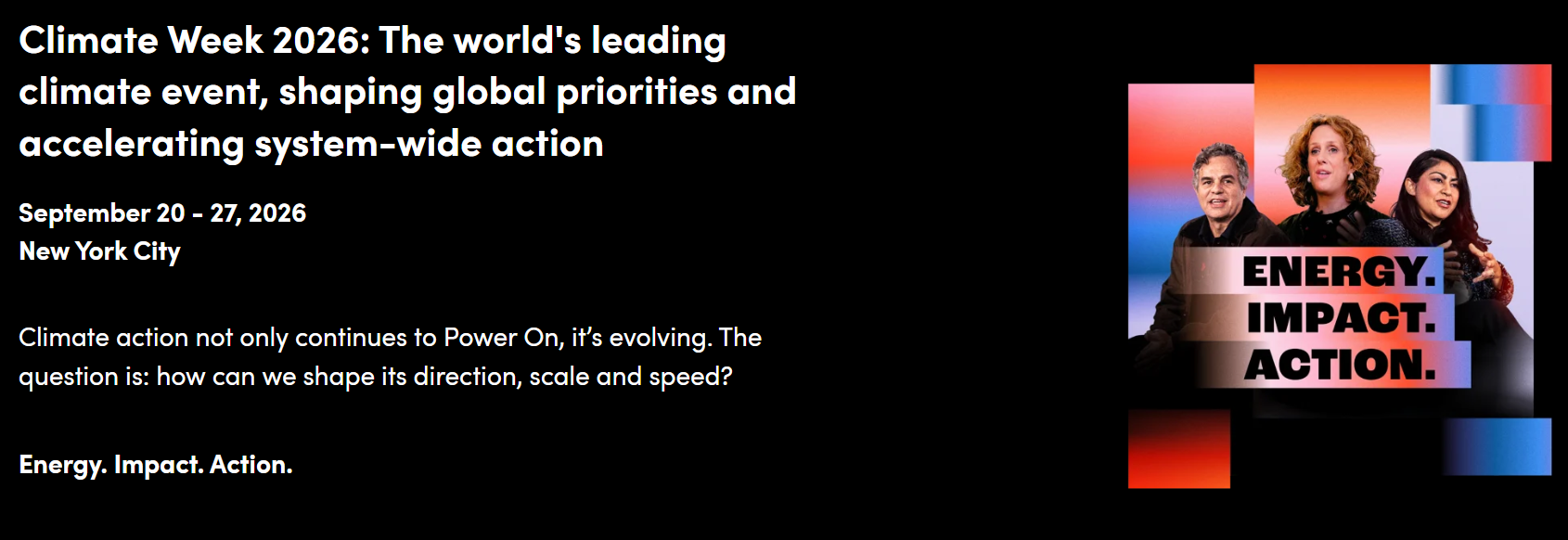
For nearly two decades, Climate Week NYC, organized by the Climate Group alongside the UN General Assembly, has brought together leading business executives, government decision-makers, academics, environmental advocates, and other thought leaders shaping capital, policy, and markets across industry sectors all around the globe. The goal of Climate Week is to connect people and ideas, encourage collaboration, and accelerate the transition toward a sustainable, low-carbon economy. With events taking place throughout all of New York City, the week offers opportunities to explore the intersection of climate science, law, economics, innovation, and public policy. To learn more about Climate Week 2026, please visit: www.climateweeknyc.org.
To illustrate just a few of the countless sessions taking place across Manhattan, my own tentative schedule includes the following events.
Monday, September 21
On Monday, I will attend an event sponsored by Columbia University’s Sabin Center for Climate Change Law entitled Mind the Gap: How States Can Advance Carbon Dioxide Removal Despite Federal Backsliding. The discussion will explore how states can use legal and policy tools to advance carbon dioxide removal technologies and projects, particularly as federal support faces uncertainty.
I’m especially interested in the role of state governments in shaping climate and energy policy, an issue that intersects with my own legal research here in Florida.
Tuesday, September 22
Tuesday is all about The U, and it’s a BIG day for my school, the University of Miami!
Climate Week has long attracted prominent research universities and international academic institutions, often considered the domain of the Ivy Leagues. With this in mind, I’m extremely proud to see the University of Miami (UM) expanding its presence and contributions to these important conversations through its Climate Resilience Institute for the second year in a row at Climate Week.
For good reason, South Florida is often described as “ground zero” for the American climate crisis, and the University of Miami plays an essential role in studying the challenges facing our region and developing solutions that can inform communities around the world. UM is taking a multidisciplinary approach to the crisis, bringing together experts from across our incredible campus to conduct groundbreaking research, generate innovative knowledge, and develop practical solutions to some of the most pressing environmental challenges of our time.
On Tuesday morning, I’m especially excited to celebrate the launch of the UM Climate Resilience Institute’s new Resilience Finance Lab at BlackRock’s headquarters, an initiative that brings together experts from academia, finance, and government to develop innovative ways to fund climate adaptation and turn resilience research into real-world investments.
And throughout the rest of the day, partnering with UM’s Center for Urban and Community Design, the Institute will host a “Spongy Urbanism Symposium,” entitled Absorb, Adapt, Thrive: Nature-Based Infrastructure for Coastal Resilience at Wagner Park. This daylong program will explore how nature-based infrastructure, innovative design, and partnerships can help coastal communities adapt to climate change. Discussions will feature examples from Miami, New York City, and Houston, illustrating how ideas developed in one coastal community can inform solutions elsewhere.
Wednesday, September 23
Wednesday begins with another event sponsored by Columbia’s Sabin Center for Climate Change Law, this time in collaboration with the Cyrus R. Vance center for International Justice, entitled The Evolving Landscape of Climate Litigation: U.S. and Global Perspectives. The discussion will examine recent developments in climate litigation in the United States and around the world, including legal challenges involving fossil fuel companies, government climate policies, human rights, and the implementation of judicial decisions.
Given my own involvement in youth-led constitutional climate litigation, I am especially interested in learning about how legal strategies are evolving across jurisdictions and what lessons can be drawn from cases around the world.
Wednesday afternoon, I will attend an event hosted by Duke University entitled Scaling Resilience Through Policy, Partnerships & Capital. This program will explore how governments, universities, businesses, financial institutions, and communities can work together to turn promising climate adaptation strategies into projects that can be implemented at scale.
This is a particularly relevant discussion for my dissertation research, which examines the intersections of environmental law, ecological conditions, and public preferences in shaping coastal resilience in South Florida.
Thursday, September 24
Thursday is another full day!
 |
 |
 |
My morning will begin with Global Digital Public Goods for the Climate Crisis, a discussion involving CrisisReady at the Harvard Data Science Initiative, NYU’s Center for Urban Science + Progress, and The GovLab. The session will explore how emerging technologies, artificial intelligence, geospatial data, and other digital tools can help communities better understand climate risks and prepare for hazards such as extreme heat and flooding.
I’m particularly interested in how these technologies might help translate increasingly sophisticated climate research into accessible information that governments and communities can actually use to help solve our climate crisis.

Thursday afternoon I am very excited to share that I will be speaking during Climate Week for the very first time, in this case on the panel for Youth Climate Case Japan – An International Youth Dialogue at the New York Academy of Sciences (115 Broadway, New York, NY) at 2:00 PM EST!
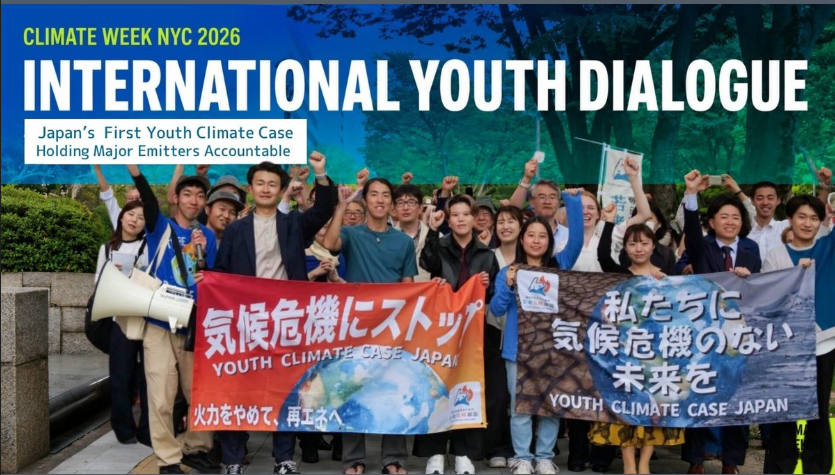
The climate crisis is not a distant threat. It is already affecting young people’s health, education, livelihoods, families, and sense of security about the future. In Japan’s first ever youth climate lawsuit, 17 young plaintiffs are asking the Nagoya District Court to require 10 major electric utilities, whose emissions account for approximately 30% of Japan’s total CO₂ emissions, to make science-aligned reductions consistent with limiting global warming to 1.5°C.
At this youth-led event, three Japanese plaintiffs will share why they chose to take legal action and how the climate crisis is affecting their lives. Following an introduction to Japan’s climate policy and the lawsuit, I will join the youth plaintiffs for an international panel discussion. Drawing on our experiences and exchanges with other young plaintiffs from Japan, Korea, and the United States, our panel will explore corporate climate accountability, young people’s rights, and the role of climate litigation in accelerating action. The discussion will also consider how young plaintiffs across borders can learn from one another and strengthen international solidarity for climate justice.
This free event is open to climate litigants, activists, NGOs, legal professionals, journalists, students, and anyone interested in youth-led climate justice. To learn more about this event or join us please visit: https://www.climateweeknyc.
A Special Visit Home
Now, before I launch this blog (and launch myself to New York), allow me to end by sharing something that has yet again given me tremendous hope for the future.
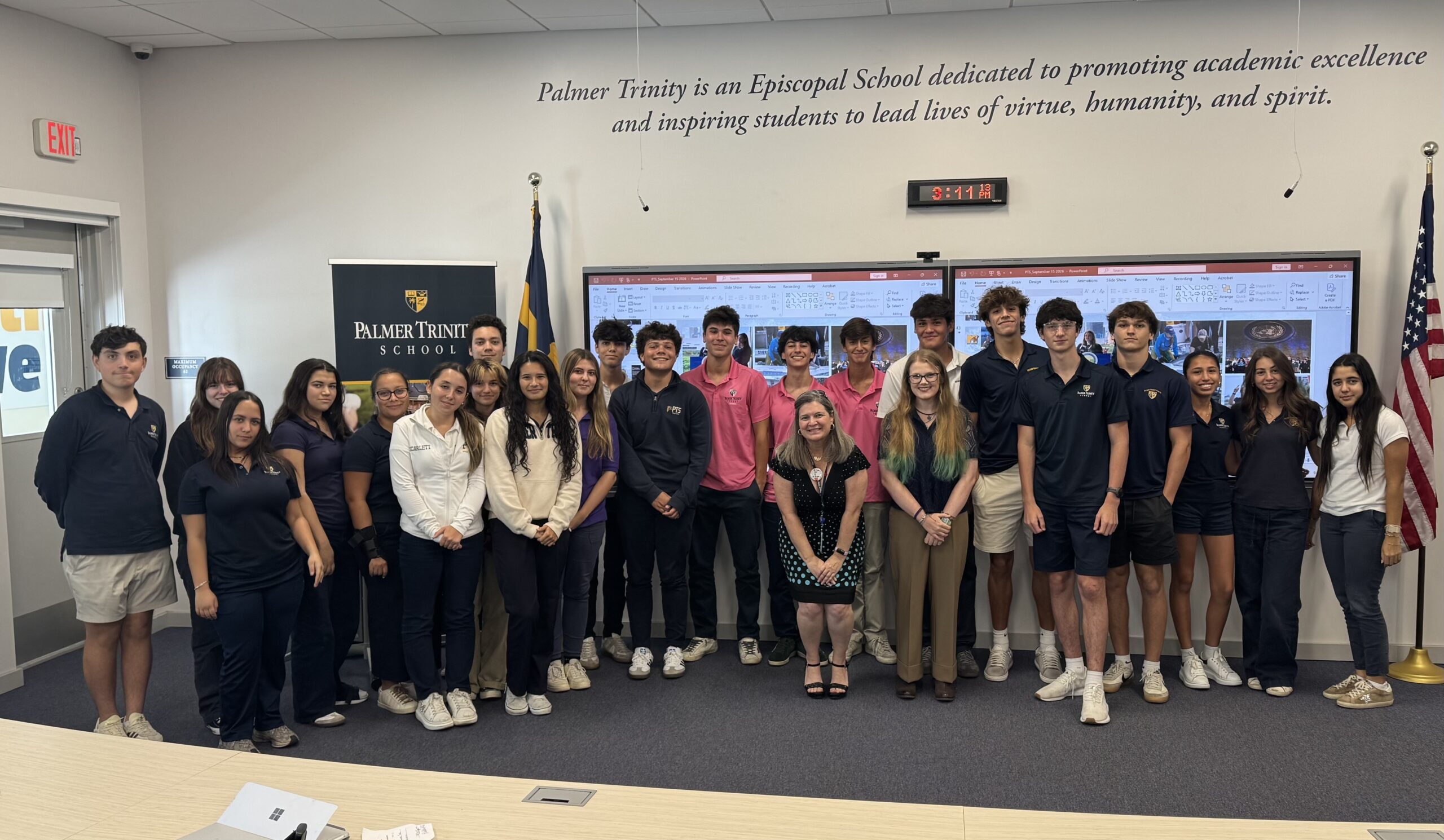
My own middle and high school, Palmer Trinity School, is spending this school year exploring the many challenges that our precious natural resource water face. As part of their curriculum, I was invited to speak with students about my own work in relationship to water, from the impacts of climate change on South Florida to the legal and scientific challenges involved in protecting our environment.
This past Tuesday, I was honored to return to campus and present a lecture entitled The Challenge of a Generation to an enthusiastic group of Palmer Falcons. As someone whose own environmental journey began while I was a student at Palmer, returning to the classroom to share what I’ve learned and discuss the challenges ahead was especially meaningful. Thank you to Ms. Catherine Manfra for having me back home.
And speaking of Palmer, the future and the important role young people will have in shaping that future, I also happened to be back on campus a few weeks ago with my brother Owen to celebrate the grand opening and dedication of the school’s amazing new STEM and Innovation Center, a concept that my brother initially conceived during his own time on campus and that my family helped support. And what I saw sure was impressive.
The new Center gives students access to advanced technologies that support a growing curriculum in AI Literacy, computer science, engineering, biomedical science, robotics, design, entrepreneurship, and advanced AP and IB coursework. It houses industrial-grade 3D printers, laser-cutting equipment, VEX Robotics systems, and drone technology which all enable students to design, build, program, and test their own creations, It will also serve as a home for the school’s award-winning Drone and Solar Car teams, as well as new Middle School Drone and Submersible Robotics teams launching this year.
These are extraordinary resources that will allow students to explore their interests, test new ideas, and develop the knowledge and skills they will need to address an increasingly complex world.
But as impressive as the new building and its technology are, what impressed me most during my visit was something that cannot be built, purchased, or programmed: the curiosity, enthusiasm, and potential of the students themselves.
The students who joined me this week give me tremendous hope for the future. Their questions, interest in the world around them, and willingness to engage with complicated environmental issues remind me why education is such an important part of addressing the climate crisis. After all, the challenges we face will require far more than any single technology, scientific discovery, court decision, or government policy. They will require people who are willing to question what is possible, challenge conventional thinking, collaborate across disciplines, and develop solutions that we have not yet imaged. And I saw that potential in the classroom at Palmer Trinity this week.
As I prepare to travel to New York to engage with leading environmental scholars, policymakers, scientists, and young climate litigants from around the world, I find myself thinking about those students back home in Miami.
I was once a student sitting in those same classrooms, learning about the world and beginning to understand the environmental challenges facing my own community. Now, years later, I have the extraordinary privilege of returning to share my experiences with a new generation of students who are beginning journeys of their own. Perhaps some of them will become scientists who make discoveries we cannot yet envision. Others may become engineers who design more resilient cities, attorneys who shape environmental law, educators who inspire future generations, or community leaders who find entirely new ways to protect the places they call home.
Whatever path they choose, I hope they carry their curiosity, determination, and willingness to make a difference with them. The climate crisis may well be the challenge of our generations, but it should never be our burden to bear alone.
As I head to New York to discuss the future with some of the world’s leading climate experts, I will be carrying with me the faces and questions of those students in Miami.
They deserve more than our promises about tomorrow. They deserve to see what we are willing to do today.