Business 101: Dealing With Our Climate Crisis Reality in Refreshing Ways
About a decade ago, as I started my climate-related work, I met and interviewed Dr. Ben Kirtman, Professor and Director of the Cooperative Institute for Marine & Atmospheric Studies (CIMAS) here at the University of Miami’s Rosenstiel School of Marine, Atmospheric, and Earth Science, and discussed how he felt we could get people to take our growing climate crisis more seriously and to more actively enact solutions. All these years later, his answer at the time — that the insurance and lending industries would likely soon insist on resiliency measures to manage climate-oriented risks and continue offering their products and services in regions like South Florida — was both astute and increasingly accurate.
With this in mind, a recent report from global insurance giant Zurich caught my attention. Like any profit-driven business, Zurich is in business to generate profits, and it does so by managing a variety of ever-evolving risks that it and its clients face. To overlook, diminish, or avoid directly addressing a material risk would be a dire dereliction of duty to their shareholders, employees, and clients. So at a time when states such as Florida, a place where zealot elected state officials remove words such as “climate change” from our laws rather than face reality, or the United States where our new President and his elected followers work feverishly to promote the very products (fossil fuels) that are polluting our atmosphere and oceans, it’s refreshing to read how a sizable, serious, for-profit enterprise, in this case Zurich, views the risks related to climate change and positions itself as a solution oriented thought leader.
“From tornados and hurricanes to flooding and wildfires, extreme weather events are taking a significant and rising tool – both economic and human – across the world. Over the past decade (2014-2023) they have resulted in approximately $ 2 trillion in economic losses. The outlook appears alarmingly bleak.”
Climate risks: Strategies for building resilience in a more volatile world
Zurich Insurance Group Report / April 29th, 2025
The Zurich report, linked below, makes clear that the insurance industry has an important role to play in building resiliency and helping manage climate risk, given its expertise in guiding businesses in managing their risks. The industry’s sophisticated risk-oriented analytical modeling and assessment tools can, for example, accurately predict extreme weather events, including windstorm and flood damage, allowing people to plan for such events and incorporate resiliency into new construction and renovations.
As you will see, the paper makes three core suggestions to business and governmental organizations, including:
1. Leverage insurer expertise by prioritizing investment in risk prevention and reduction.
2. Increase access to insurance and the industry’s risk management solutions worldwide.
3. Develop and expand private-public risk-sharing mechanisms to support long-term protection objectives.
Rather than misleading people with promises from the past or marginalizing what the world now accepts as established scientific fact, it’s refreshing to see such a significant business deal with reality in a straightforward and honest manner. The sooner those who deny our climate reality adopt a similar approach to Zurich, the sooner we can address the core problem by becoming fully resilient to the damage done, while also creating a sustainable energy-based economy that mitigates the problem for the lasting betterment of our environment and future generations.
Read the report by clicking here, and a Zurich article about the report below:
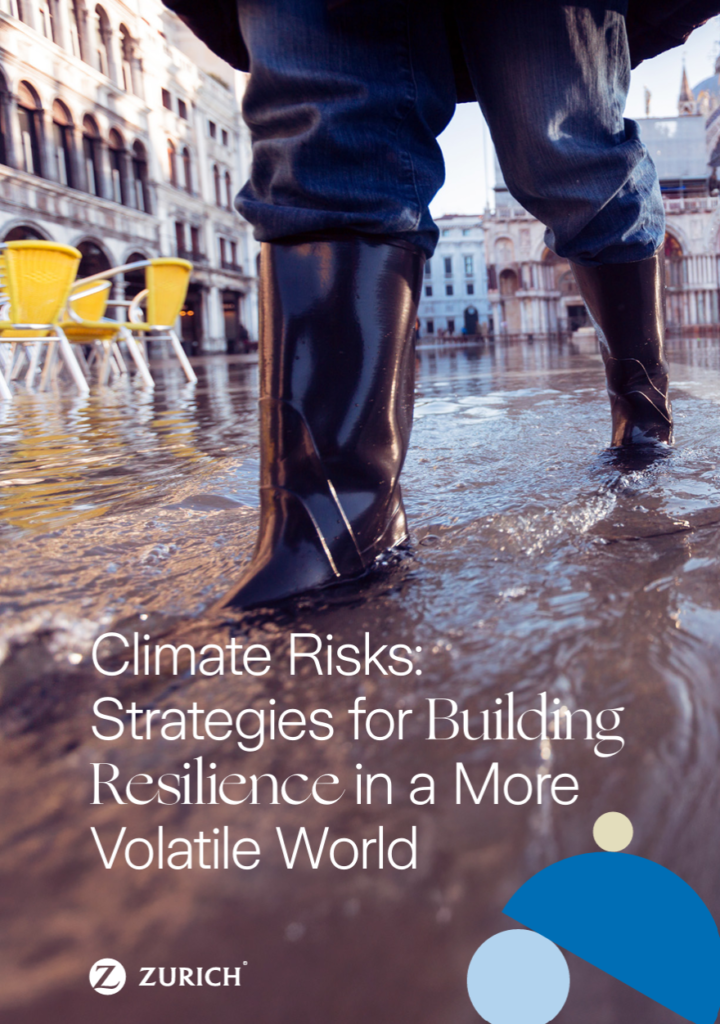
Climate risks: Strategies for building resilience in a more volatile world
April 29, 2025
A new paper from Zurich Insurance Group (Zurich) presents a roadmap for how governments, insurers, and communities can work together to meet the growing challenges posed by extreme weather and natural catastrophes.
From tornados and hurricanes to flooding and wildfires, extreme weather events are taking a significant and rising toll – both economic and human – across the world. Over the past decade (2014-2023) they have resulted in approximately USD 2 trillion in economic losses.
The outlook appears alarmingly bleak. The frequency and intensity of extreme weather events and natural catastrophes are increasing, a trend that may be exacerbated in the coming decades by long-term shifts in climate patterns. Variations in temperatures, rising sea levels, and changes in precipitation patterns could disrupt natural ecosystems, agricultural productivity, and human health, resulting in persistent environmental and economic damage.
Insurers are experts in understanding and managing the risks associated with extreme weather. Their expertise is used to provide coverage that enables individuals and businesses to recover from natural catastrophes by having the necessary financial resources to restore and rebuild post-event. In 2023 alone, the insurance industry paid out USD 108 billion in claims related to losses from natural catastrophes. In addition to offering financial protection, insurers provide risk management insights, advanced modeling and other tools that can play a vital role in advising companies, governments, and municipalities on how to reduce risk and thereby build resilience.
However, the financial security provided by insurance has its constraints. In 2023, only 38 percent of global losses from extreme weather and natural catastrophes were insured. Moreover, USD 174 billion of global losses were uninsured.
Several factors contribute to these uninsured losses. Individuals and businesses may underestimate both the potential losses and the probability of a natural catastrophe occurring, leading them to avoid purchasing appropriate coverage. The affordability and availability of insurance also play significant roles. Over the past 30 years, the total cost of insured losses from natural catastrophes has grown at a faster rate than the global economy, more than doubling relative to global GDP since 1994. If insured losses continue to grow at this rate, premiums for climate risk coverage will need to increase to reflect the additional risk. This in turn, will affect the level of protection that individuals and businesses are willing and able to purchase, with potential consequences for the overall functioning of the market.
To protect societies and economies from the growing threats posed by extreme weather and natural catastrophes, governments and policymakers should prioritize climate resilience. In doing this, they should consider the following three complementary responses:
1. Invest in risk prevention and reduction strategies
The rationale for investing in climate resilience is clear. However, determining where and how to invest in risk prevention and reduction requires specific expertise and collaboration among specialists from various fields. This requires a robust framework of governance.
Recommended measures to achieve this include building climate resilience into national planning; establishing national centers of competence to pool data and expertise to create more informed planning decisions; and making more effective use of technology, data analytics and scientific research to enhance risk assessment and climate modeling. Embracing the expertise and forward-looking risk management approach of the insurance industry can help businesses and communities build resilience to future climate risks.
2. Enhance insurance market accessibility, affordability and transparency
Insurance will always play a key role in providing protection and strengthening climate resilience. But if the severity and frequency of extreme weather events continue to trend upward, the cost of insurance coverage will rise as well. This means that, over time, there is a risk that households and businesses may end up underinsured or even without coverage. Investment in risk prevention and reduction measures is the best first step to addressing this challenge, as resilience is the best insurance.
However, there are also positive actions that governments can take to enhance insurance accessibility and affordability. For example, they can raise awareness of extreme weather risks while offering incentives for households and businesses to obtain adequate insurance. This can also be achieved by establishing a regulatory environment that sustains market capacity, attracts new entrants, and fosters competition and innovation to broaden coverage options for consumers.
While governments can exert a positive influence, it is vital that any regulatory regimes remain flexible, allowing pricing and products to adjust to evolving climate risks. Regulating rates and premiums can obscure the true costs associated with underlying risks, potentially encouraging development in hazardous areas, and discouraging necessary investments in resilience.
Instead, governments should permit insurance markets to establish rates and premiums that accurately reflect the actual level of risk, and the costs associated with repairs for these events – referred to as ‘risk-based pricing.’ This approach guides economies toward resilient and sustainable development practices and ensures that resources are allocated effectively to minimize exposure to climate risks.
3. Develop collaborative risk-sharing solutions
Strengthening climate resilience requires investing in risk prevention and reduction measures, as well as enhancing insurance accessibility and affordability. However, given the constraints on public finances, the costs are likely to be too high for many governments to bear. Instead, innovative risk-sharing solutions and public-private partnerships need to be developed.
‘Blended finance,’ for instance, can help to increase investment in risk prevention and reduction by crowding in private finance. The insurance industry can help unlock these investments by de-risking capital flows.
There could also be a role for public-private partnerships (PPPs) to enhance insurance accessibility and affordability. For instance, the creation of (re)insurance pools can help share resources and distribute risks, which can improve affordability, especially in higher-risk areas. Private insurance markets can price these risks, while governments determine how natural catastrophes losses are distributed.
A race against time
The escalating costs of extreme weather and natural catastrophes highlight an urgent need for action from governments, insurers, and communities to collaboratively build climate resilience. Achieving this will require a multifaceted approach that includes targeted investments in resilience, enhancements to insurance markets, and the development of effective risk-sharing solutions. Addressing these challenges now will help to ensure that societies are better equipped to withstand and recover from the growing threats posed by extreme weather and natural catastrophes in the future.